Former India head coach Ravi Shastri has questioned Team India’s decision to keep 15-year-old Vaibhav Sooryavanshi on the bench, saying the Ireland series could have been the ideal stage to hand the young batter his international debut.
Sooryavanshi, one of Indian cricket’s most talked-about teenage prospects, did not feature in the playing XI during the Ireland T20I series and also missed out in the opening T20I against England. His absence has now sparked a fresh selection debate around head coach Gautam Gambhir and captain Shreyas Iyer.
Speaking on Sky Sports, Shastri said India should not delay the youngster’s entry for too long. He argued that the slow and spongy conditions in Ireland, along with the smaller ground dimensions, could have suited Sooryavanshi’s fearless batting style.
Shastri also suggested that keeping a young player on the bench for too long can create unnecessary pressure. According to him, Sooryavanshi brings an “X-factor” that India can use in the T20 format, especially after the teenager’s eye-catching rise through domestic cricket and the IPL.
“He should’ve played in Ireland. Get him in as soon as you can,” Shastri said, while backing the left-handed batter to be given a chance at the earliest.
India’s team combination has come under scrutiny after the 2-0 defeat to Ireland and a rain-hit opening T20I against England. In that match, India posted 189/7 before rain forced the game to be abandoned without England beginning their chase.
The debate is not limited to Sooryavanshi. Fans and analysts are also discussing whether India should strengthen the finishing role by bringing Rinku Singh into the playing XI. With Sanju Samson enduring another difficult outing at the top, there is growing pressure on the management to rethink the balance of the batting order.
However, handing a debut to a 15-year-old on a major overseas tour remains a big call. While Shastri believes Sooryavanshi should be unleashed quickly, others may argue that India need to protect the youngster from early pressure and manage his transition carefully.
For now, the message from Shastri is clear: India have a rare talent in the squad, and he does not want him warming the bench for too long.
Sony Interactive Entertainment and Rockstar Games have announced that Grand Theft Auto VI will launch on November 19, 2026, with PlayStation 5 players getting a version designed to make deeper use of PS5 hardware features, including the DualSense controller, Tempest 3D AudioTech and the console’s ultra-high speed SSD.
Pre-orders for GTA VI will begin on June 25 at midnight local time on the PlayStation Store. The game will also be available in an Ultimate Edition, featuring a collection of premium vehicles, weapons, apparel and story-linked content built around lead characters Jason and Lucia.
The announcement adds another major checkpoint to what is easily one of the most anticipated video game launches of the decade. For many players, the countdown has now moved from “when will it come?” to “how fast can I press pre-order?” — a familiar modern ritual involving excitement, screenshots and possibly a very nervous wallet.
GTA VI is set in Leonida, Rockstar’s fictionalised take on a sun-soaked American state, with Vice City returning as its neon-lit centrepiece. Rockstar has described the game as the biggest and most expansive evolution of the Grand Theft Auto series so far.
On PS5, Sony says the game will use the DualSense wireless controller to bring more physical feedback into gameplay. Haptic feedback will deliver responsive vibrations, while adaptive triggers will offer changing resistance depending on in-game actions. The controller’s integrated speaker will also be used for selected sound effects and interactions.
The game will also use Tempest 3D AudioTech, allowing players to experience more accurate sound positioning across Leonida, from the streets of Vice City to action unfolding across the wider state. Sony says the PS5’s ultra-high speed SSD will help deliver near-instant loading for the game’s large open world.
Players who purchase GTA VI before November 20, 2026, will receive the Vintage Vice City Pack, described as a collection of items inspired by Vice City’s neon-soaked past. Those who pre-order any edition on the PlayStation Store will also receive a redeemable free month of GTA+.
According to the supplied edition details, the GTA VI Ultimate Edition includes several additional rewards, such as the 95′ Grotti Cheetah, Jason’s Dinka Enduro motorcycle, Crest Kayak, Ganado Retro Build for Jason’s Vapid Ganado, access to Rideout Customs Mod Shop and One-Eyed Willies Mod Shop, the Shitzu Sqaulo boat, and a 67′ Vapid Dominator Buggy with Paradise Garage in Watson Bay.
The edition also lists exclusive missions, including a car repossession side mission involving classic cars for Wyman and a gang compound raid mission tied to the PTT YOUNGIN$ Illegal Goods Store.
Other listed rewards include Goodtime Gear inspired by Macca the Gator, Vice City-style outfits for Jason and Lucia, access to the Electric Fang Tattoo Shop, Stock 305 Clothing Store and Sara’s Unisex Salon, along with personalised weapon variants for Jason’s Girardi ES9 and Lucia’s Klose K17 pistols.
The Vintage Vice City Pack, offered as a pre-order bonus, is listed as including the 55′ Vapid Stanier, Shore Court Personal Garage with weapons locker and safe storage for stolen goods, Jason’s Chic Linen Suit, Lucia’s Red Sequin Mini Dress and Curls, and a Tommy Vercetti-inspired weapon pattern.
Grand Theft Auto VI marks the first new mainline GTA entry since Grand Theft Auto V, which was first released in 2013 and went on to become one of the most successful entertainment products in history. That legacy gives GTA VI unusually high stakes, even by blockbuster gaming standards.
With Rockstar’s open-world reputation and Sony’s PS5-focused feature push, GTA VI’s November 19 launch is shaping up to be more than just a game release. It is likely to be a global entertainment event — one where Vice City’s lights may shine brightest, but PlayStation clearly wants the controller in players’ hands to do some of the talking.
Grand Theft Auto VI launches November 19, with pre-orders starting June 25.
Pune: What first looked like a tragic trekking accident at Lohagad Fort near Pune has now turned into a chilling murder investigation, with police arresting 26-year-old Ketan Agarwal’s fiancée, Siya Goyal, and her alleged lover, Chetan Chaudhary.
Ketan, a Pune-based real estate professional, died on June 18 after falling into a gorge during a trek with Siya. She initially told police that he slipped while posing for photographs. Investigators now allege that Siya and Chetan pushed him to his death and attempted to pass off the killing as an accident.
The case has drawn widespread attention not only because of the alleged planning behind the crime, but also because Ketan and Siya were engaged and preparing to marry later this year. Their families had reportedly begun elaborate wedding arrangements, including booking a palace in Rajasthan’s Udaipur at a cost of around Rs 17 crore and arranging two private planes to fly guests.
Who Was Ketan Agarwal?
Ketan Agarwal was the director and Chief Marketing Officer of Success Group, a family-run real estate business based in Pune. A resident of Gahunje in Pune district, he was seen as part of a young generation of business leaders in the city’s fast-growing real estate sector.
He had completed a Master of Science degree in Entrepreneurship from the Babson F.W. Olin Graduate School of Business and also held a BBA degree from Symbiosis University.
According to his LinkedIn profile, Ketan was interested in sustainability and innovation, and wanted to focus on projects that could promote economic growth while contributing to a greener future. In a city where real estate often races ahead faster than traffic on the Mumbai-Pune Expressway, his stated focus on greener development stood out.
Sister’s Suspicion Helped Shift The Probe
According to police sources cited in reports, a major breakthrough came after Ketan’s funeral, when Siya visited his family home. During the interaction, Ketan’s sister reportedly questioned Siya about the events that led to his fall.
Her answers, police sources said, appeared inconsistent. The family then alerted investigators, refusing to accept the accident theory at face value.
Police later examined CCTV footage, phone records and digital evidence. Investigators found that Siya and Chetan had allegedly been in contact for years and had spoken thousands of times between January and June this year. Reports said their calls during that period added up to 238 hours.
The Hoodie That Raised Questions
One of the most striking clues, according to investigators, came from CCTV footage showing a man in a hoodie following Ketan and Siya around Lohagad Fort despite the June heat.
Police found the clothing unusual enough to examine the footage more closely. The man was later identified as Chetan Chaudhary, investigators said.
Police also allege that Chetan had taken steps to avoid detection. His internet activity was reportedly off for much of the day, and he allegedly left his own phone at his shop to avoid location tracking while carrying another phone.
But the effort to remain unnoticed appears to have been undone by the hoodie — a wardrobe choice that investigators found too conspicuous for a hot June day.
Police Probe Earlier Alleged Attempts
Investigators are also examining whether there were earlier failed attempts to harm Ketan before the June 18 incident.
In one alleged attempt, Siya is suspected to have tried to push Ketan while pretending to save him from a snake. Police are also looking into other circumstances that may have prevented earlier plans from being carried out.
Reports further said investigators are examining an episode involving a planned Bali trip for a pre-wedding shoot. Siya allegedly sabotaged the trip by taking away or damaging Ketan’s passport, a detail police believe may help establish the nature of the relationship and the alleged conspiracy.
Wedding Preparations Had Already Begun
The allegations have stunned both families because the wedding was already being planned. Ketan and Siya were engaged and expected to marry later this year.
Their families had reportedly made extensive arrangements, including a luxury venue booking in Udaipur and private aircraft for guests. Those plans have now become part of the broader background to a case that has moved from a suspected accident to a murder investigation.
Police have arrested Siya Goyal and Chetan Chaudhary, and further investigation is underway.
For Ketan’s family, the case is no longer only about how he died, but about whether a carefully constructed story nearly buried the truth with him. What began as a fall at a historic fort has now become a grim reminder that in criminal investigations, the smallest inconsistency — even a hoodie in the heat — can change everything.
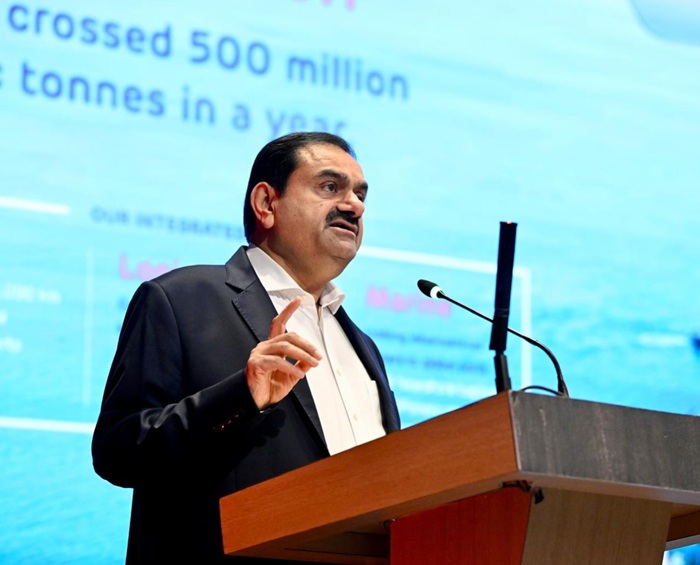
Ahmedabad: Gautam Shantilal Adani, founder and chairman of the Adani Group, celebrates his 64th birthday today, marking another milestone in the career of one of India’s most influential — and closely watched — business figures.
Born on June 24, 1962, in Ahmedabad, Adani built a conglomerate that now spans ports, power, airports, renewables, cement, data centres, defence, roads, rail, media, real estate, FMCG and digital platforms. In corporate India, that is less a business portfolio and more a very ambitious spreadsheet with national infrastructure written across the top.
The Adani Group describes itself as India’s largest integrated infrastructure group, with a combined market capitalisation of more than $150 billion across twelve publicly traded companies. Its businesses follow the group’s stated philosophy of “Nation Building” and “Growth with Goodness,” while investors often see it as a proxy for India’s infrastructure expansion story.
Adani is among India’s richest industrialists. Forbes reported earlier this month that his net worth had risen to about $89.2 billion, helping him regain the title of Asia’s richest person. Wealth rankings, of course, move with the market; billionaire lists can be less stable than Mumbai traffic during monsoon, but Adani’s position remains central to India’s corporate landscape.
His journey began far from boardrooms and mega-projects. As a teenager, Adani moved to Mumbai in 1978 and worked as a diamond sorter. In 1981, he returned to Ahmedabad to manage his elder brother’s plastics unit, a move that introduced him to global trading through polyvinyl chloride imports.
In 1988, he founded Adani Exports, now Adani Enterprises, which started in commodity trading before expanding into metals, textiles and agro products. Economic liberalisation in the 1990s gave the company a larger runway, and Adani used it to move aggressively into infrastructure.
The turning point came with Mundra Port in Gujarat. After obtaining the contract in the 1990s, Adani developed what became India’s largest private-sector port. From there, the group widened its footprint into power generation, transmission, renewable energy, airports, city gas distribution and logistics.
Adani Power was founded in 1996 and became one of India’s major private power producers. The group later entered renewable energy in a big way, with Adani Green Energy becoming a key player in solar and wind power. Adani has also committed large investments to support India’s green energy transition, including a stated $70 billion plan.
The conglomerate’s expansion has not stopped at infrastructure. In 2022, the Adani family acquired Ambuja Cements and ACC from Holcim in a $10.5 billion deal, instantly making the group one of India’s biggest cement players. Around the same period, Adani’s media arm moved into NDTV, a development that triggered debate over media ownership and editorial independence in India.
Adani has also made major philanthropic commitments. In 2022, on his 60th birthday, the Adani family announced a ₹60,000 crore commitment for healthcare, education and skill development. More recently, the group has highlighted rural healthcare and education initiatives under the Adani Foundation.
But Adani’s rise has also brought intense scrutiny. He has often been described as close to Prime Minister Narendra Modi and the Bharatiya Janata Party government, a relationship that critics have cited while raising allegations of cronyism. The Adani Group has repeatedly rejected such allegations.
In January 2023, Hindenburg Research accused the Adani Group of stock manipulation and accounting fraud, allegations the group strongly denied. In January 2024, the Supreme Court of India declined to transfer the matter to a CBI or SIT investigation, while leaving the market regulator SEBI to continue its work where required.
Adani also faced legal scrutiny in the United States. In November 2024, U.S. prosecutors charged Adani and other executives in a case alleging a bribery and fraud scheme linked to solar contracts. The Adani Group denied wrongdoing. In May 2026, the Trump administration moved to dismiss the criminal fraud charges, while related civil matters were reported as being settled without admission of wrongdoing.
Despite controversies, Adani remains one of the most consequential figures in Indian business. His group’s assets touch daily life in ways many consumers may not immediately notice — from electricity and airports to cooking gas, cement, food products and digital services.
In 2022, Time magazine included Gautam Adani in its list of the 100 most influential people in the world, reflecting his growing global visibility. Today, at 64, he stands at the intersection of India’s infrastructure ambitions, market confidence, political debate and corporate accountability.
For supporters, Adani represents first-generation entrepreneurship at national scale. For critics, his story raises important questions about the concentration of economic power and the relationship between business and government. Either way, Gautam Adani’s 64th birthday is not merely a personal milestone — it is a reminder of how deeply one businessman’s rise has become tied to the larger story of modern India.
Credit: Based on a Facebook article originally written by Kamlesh Chaubey of Swadesh News Channel, with additional newsroom-style restructuring and verification from published reports.
Indore: Madhya Pradesh is often described as an island of relative calm, but Indore’s crime history tells a more complicated story. In the early 2000s, the city known as “Mini Mumbai” saw a violent underworld feud that began with the killing of Vishnu Ustad, one of Indore’s most feared and influential local strongmen, and spiralled into a chain of revenge killings, jail violence and courtroom drama.
Vishnu Ustad, whose real name was Vishnu Kashid, was known in local crime circles as a wrestler-turned-gang leader. The title “Ustad” came from his reputation as a pehalwan, but over time it became a marker of fear, influence and authority in Indore’s mill-area politics and underworld networks.
According to local accounts, Vishnu began as a worker in a textile mill before building a criminal network that expanded into land disputes, forced evictions, illegal recoveries and contract-related influence. At his peak, he was considered one of Indore’s most powerful underworld figures, with links that reportedly stretched from working-class settlements to union politics.
His rise also reflected the way crime, labour politics and land power often overlapped in urban India during the 1990s. Indore was expanding rapidly, property values were rising, and musclemen increasingly became informal “settlers” of disputes. In that shadow economy, men like Vishnu Ustad became both feared and sought after.
But, as often happens in gangland histories, the biggest threat came not from outsiders but from within.
Several of Vishnu Ustad’s former associates later drifted away and built their own networks. Among the names that emerged in the rivalry were Jeetu Thakur and Satish Bhau. Jeetu, according to local crime narratives, had once been close to Vishnu’s gang but later became a rival after developing his own influence.
The split allegedly turned deadly. In Chaubey’s account, Jeetu Thakur, Satish Bhau and other associates planned Vishnu Ustad’s murder to break his control over Indore’s criminal underworld and capture the space he dominated.
Vishnu Ustad was attacked near Anoop Talkies while travelling by motorcycle after attending a community meeting, according to the account. A vehicle allegedly hit his motorcycle, after which assailants attacked him with knives. He was taken first toward the police station and then toward hospital, but he died before he could be saved.
His murder marked the beginning of one of Indore’s most violent gang rivalries.
The person who would become central to the next phase of the story was Vishnu’s son, Yuvraj Ustad. According to local accounts and reports from the period, Yuvraj was determined to avenge his father’s death. What followed was a sequence of killings in which several men accused or linked in local narratives to Vishnu Ustad’s murder were later killed.
The list became part of Indore’s crime folklore: Mahendra Thakur was killed in 2003; Mahendra alias Timma was killed in 2007; Manoj Khaparde and Dilip were killed in the Kishanganj area; Narendra Singh Kushwah was killed in Palasia; Manish Shooter died in a police encounter; and Tarun Sajnani died by suicide in circumstances that continued to generate speculation in local circles.
The most dramatic killing, however, was that of Jeetu Thakur inside Mahu sub-jail.
Jeetu Thakur, who was accused in the Vishnu Ustad murder case, was lodged in Mahu sub-jail when armed men entered the prison during visiting hours and opened fire. Reports say he was shot in the head, while others, including jail personnel and visitors, were injured. The attack shocked Indore not only because of the killing but because it happened inside a jail — a place where the state, at least on paper, is supposed to have full control.
The prosecution later alleged that the killing was part of a revenge conspiracy. Yuvraj Ustad was named as an accused, but the case took a major turn in court years later.
After a trial that lasted about 15 years, an Indore court acquitted Yuvraj Ustad and others due to lack of evidence. His defence argued that he was lodged in a jail in Maharashtra at the time of the incident. The court accepted the argument and held that the prosecution had failed to prove the conspiracy against him. Two accused were convicted and sentenced to life imprisonment.
The verdict also exposed weaknesses in the investigation. Several witnesses turned hostile, including jail personnel who had initially been treated as key witnesses. The result was a courtroom ending that was very different from the street-level narrative that had dominated Indore’s crime discussions for years.
The gang war did not remain frozen in the 2000s. Some surviving names from that era reappeared years later in other criminal and business-linked disputes. In 2021, Indore again saw violence linked to the city’s liquor trade when businessman Arjun Thakur was shot during a dispute at a syndicate office in Scheme 74. Police named Satish Bhau among the accused in that case, bringing back memories of the older gang rivalries that had once unsettled the city.
The liquor syndicate dispute pointed to a larger reality: the form of urban power had changed, but the ingredients remained familiar — contracts, cash flow, territory, intimidation and political proximity.
Meanwhile, the families and associates linked to the old underworld era moved in different directions. Some stayed in the shadows. Some entered business. Some sought social or political legitimacy. Indore, like many fast-growing cities, absorbed its old conflicts into new forms of influence.
The story also intersects with another powerful name in Indore’s public memory: Vishnu Prasad Shukla, popularly known as “Bade Bhaiya.” He was a senior BJP figure, a dominant local personality and often described in political circles as “Indore’s Bal Thackeray.” However, his story belongs more to the world of politics and mass influence than to the Vishnu Ustad gang war. The comparison is useful only to understand Indore’s culture of strongmen — not to mix separate histories into one.
The Vishnu Ustad-Jeetu Thakur-Yuvraj Ustad saga remains one of Indore’s most talked-about crime chapters because it had every element of a gangster chronicle: a feared don, rebellious protégés, a public murder, a son’s alleged revenge, killings across years, a jail attack and a court case that collapsed against one of the central accused.
But beyond the drama, the story carries a civic warning. Gang wars are rarely only about personal enmity. They grow where land, money, politics, weak policing and public fear meet. Indore moved on, cleaned up its image and became one of India’s most admired urban success stories. Yet this bloody chapter remains a reminder that even cities celebrated for order and enterprise have shadows beneath the bright lights.
Patna/Ara: Bharat Bhushan Tiwari, a 28-year-old resident of Bilauti village in Bihar’s Bhojpur district, has become the centre of a major political and social storm after he died following a police encounter on June 17. What began as a local police operation has now grown into a wider debate over encounter policing, due process, rural distress, state accountability and the power of social media to turn a village voice into a statewide symbol.
Tiwari was known locally for raising public issues through social media and interactions with officials. Villagers and supporters described him as a young activist who spoke about the problems of poor families, flood victims and displaced communities. India Today reported that he was from Bilauti village under Shahpur police station and had become known for highlighting issues affecting local residents.
His death has triggered protests, political reactions across party lines, court petitions and a judicial inquiry ordered by the Bihar government. The controversy has also led to questions over whether the police operation was a necessary response to an armed threat or an avoidable tragedy that could have been handled differently.
Who was Bharat Bhushan Tiwari?
Bharat Bhushan Tiwari was not a mainstream political leader, nor a nationally known activist before his death. He was a young man from Bhojpur whose visibility came largely through social media videos, village-level activism and his repeated attempts to raise local grievances.
According to reports, Tiwari frequently spoke about issues such as recurring floods, river erosion, displacement and the condition of poor rural families. During one of his livestreams, he reportedly spoke less about himself and more about villagers who had been displaced multiple times and whose problems, he alleged, had been ignored by the authorities.
Supporters saw him as a fearless voice for the poor. Police, however, presented a very different picture during the confrontation, saying they had received information that he was carrying a pistol and firing in public. This sharp contrast between public perception and the police version is exactly why the case has become so emotionally charged.
What happened in Bhojpur?
The incident unfolded in Bilauti village under Shahpur police station area. According to The Indian Express, Tiwari had been at the centre of a two-day standoff with police before he died at Patna Medical College and Hospital after sustaining gunshot injuries in an encounter. The report said the confrontation was also livestreamed, adding another layer of scrutiny because parts of the episode were seen by the public in near real time.
Police said they received information that a man was moving around with a pistol and firing in the air. A team of local police and Special Task Force personnel reached the spot. Police claimed they repeatedly asked Tiwari to surrender but he allegedly continued firing intermittently, creating a threat to officers and local residents.
According to the police version, STF personnel wearing bulletproof jackets tried to close in on him, after which he allegedly fired at them and police retaliated. Police said he sustained bullet injuries and was later taken for treatment, where he died. India Today reported that police claimed to have recovered a pistol, live cartridges, a magazine and empty shells from the spot.
But this is only one side of the story.
Why was Bharat Tiwari killed?
The direct answer is: the exact reason and circumstances remain disputed and are now subject to inquiry.
Police say Tiwari was shot in self-defence after he allegedly opened fire during the operation. His family and supporters allege that he had surrendered, thrown away his weapon and was shot despite no longer posing a threat. Hindustan Times reported that the family claimed he had surrendered and discarded the weapon before being fatally shot by police.
This disputed sequence is the heart of the case. If the police version is correct, the encounter may be presented as a response to an armed threat. If the family’s allegation is proven, it would raise serious questions about extra-judicial force and accountability.
A purported video circulating on social media has added to the controversy, with reports saying it appeared to show Tiwari throwing away his weapon before the firing. However, the authenticity and full context of such videos have not been independently established by all outlets, and that is why a formal investigation is crucial.
What changes did he make to society?
Bharat Tiwari’s social impact appears to have come in two phases: before his death and after it.
Before his death, his supporters say he gave a public voice to local issues that rarely make headlines — floods, erosion, displacement, administrative neglect and the struggles of rural families. He used social media not for glamour, but as a loudspeaker for grievances from the margins. In a state where paperwork often travels slower than a bullock cart in a monsoon field, that digital pressure mattered to many villagers.
After his death, his impact became much larger. The case forced the Bihar government to order an independent judicial inquiry under a retired High Court judge. It also led to suspensions of police personnel and demands for an independent probe.
The case has also reached the courts. A plea was filed in the Supreme Court seeking a CBI probe and an independent expert committee headed by a former Supreme Court judge. Hindustan Times reported that the plea described the incident as an alleged extra-judicial killing and argued that police cannot become a punishing authority in a democratic society.
Separately, a PIL was filed in the Patna High Court seeking an independent and fair probe, while the Bihar Human Rights Commission issued notices to state authorities and sought reports.
In that sense, Tiwari’s death has done what his videos tried to do: put neglected questions of rural suffering, police procedure and state power into the public domain.
Political storm and public anger
The encounter quickly moved beyond Bilauti village. Hindustan Times reported that angry villagers blocked the Bihar-UP Expressway for more than eight hours after his death, alleging that the encounter was staged and demanding an independent probe.
The case also created unease within the ruling political establishment. Leaders across party lines, including some from the NDA, questioned the police action. Former Union minister Ashwini Kumar Choubey reportedly called the incident a shame on democracy, while other leaders demanded an impartial inquiry.
As of June 23, Hindi media reports said an FIR for murder had been registered against police personnel, including an SDPO and SHO, on the complaint of Tiwari’s mother.
Why is Bharat Tiwari being compared with Bhagat Singh?
The Bhagat Singh comparison is emotional, symbolic and politically loaded. It is not a historical equivalence, but a reflection of how supporters are interpreting Tiwari’s death.
Bhagat Singh is remembered as a young revolutionary who challenged colonial authority and was executed by the British in 1931 at the age of 23. Tiwari’s supporters draw parallels because he was young, called himself a “krantikari,” spoke against authority, raised public issues and died in a confrontation with the state.
The Indian Express reported that Tiwari referred to himself as a revolutionary in his videos and suggested that people like him were often branded “mad” or “anti-national.” That language has helped supporters build the Bhagat Singh comparison around themes of courage, dissent and sacrifice.
However, a responsible reading requires caution. Bhagat Singh was a freedom fighter in colonial India with a distinct ideological and historical role. Bharat Tiwari was a contemporary village-level activist whose death is still under investigation. The comparison, therefore, says more about public anger and the search for modern symbols of resistance than about a direct match between two lives.
Why the case matters
The Bharat Tiwari case matters because it sits at the intersection of several uncomfortable questions.
Can police use lethal force when a person is armed? Yes, in situations of immediate threat and lawful self-defence. But can police shoot a person after surrender? No — if that allegation is proven, it would strike at the rule of law.
That is why the investigation must establish the exact sequence: whether Tiwari fired first, whether he surrendered, whether the police followed standard operating procedures, whether non-lethal options were available, and whether medical response was timely.
The case also shows the power and danger of viral video justice. Livestreams can expose truth, but clips can also be incomplete, emotional or misleading. The answer must come from evidence — full video records, ballistic reports, medical findings, witness statements, call logs and an impartial inquiry.
Bharat Bhushan Tiwari’s story is no longer only about one young man from Bilauti village. It has become a test of how democracy treats dissent, how police power is investigated, and whether rural voices are heard before tragedy turns them into slogans.
For his supporters, he was a fearless young man who spoke for the poor and died like a revolutionary. For police, he was an armed threat during a dangerous operation. For the courts and inquiry panel, he is now a case file demanding facts over noise.
Until the investigation is complete, one thing is clear: Bharat Tiwari’s death has forced Bihar to confront a question far larger than one encounter — whether justice in a democracy comes from the barrel of a gun or the discipline of the law.
बिहार के भोजपुर ज़िले के बिलौटी गांव में 17 जून को पुलिस मुठभेड़ में जिस भरत भूषण तिवारी (28) की गोली लगने से मौत हुई थी
उसी भरत भूषण का 16 जून 2026 का वीडियो है जब पुलिस उसे पकड़ने आई थी तो पुलिस बंदूक तान रखी तभी उसके बाद भरत भूषण ने अपनी पिस्तौल तान थी।
New Delhi: President Droupadi Murmu conferred Padma Awards on a distinguished group of personalities from sports, arts, literature, science, medicine, public service and social work at a ceremony held at Rashtrapati Bhavan, recognising their exceptional contributions to the nation.
Among the most notable recipients was veteran Indian cricketer and former captain Rohit Sharma, who received the Padma Shri for his contribution to Indian cricket. Widely known as the “Hitman”, Rohit holds the record for the most international sixes across formats and the highest individual score in One-Day Internationals. He is also among the most successful batters in T20 Internationals, with five centuries to his name.
The ceremony also celebrated achievements across the arts. Veteran Malayalam cinema icon Mammootty was honoured with the Padma Bhushan for his contribution to Indian cinema, while acclaimed playback singer Alka Yagnik received the Padma Bhushan for a musical career spanning more than four decades and thousands of songs across multiple Indian languages.
Actor, filmmaker and producer R. Madhavan was awarded the Padma Shri, recognising his extensive contribution to Indian cinema in Tamil, Hindi and other languages. Veteran actor Satish Shah was posthumously honoured with the Padma Shri for his enduring contribution to theatre, television and film.
In the field of sports, tennis legend Dr. Vijay Amritraj received the Padma Bhushan. A pioneer of Asian tennis, Amritraj won 16 ATP titles and remained Asia’s top-ranked player for 14 years before establishing himself as an internationally respected sports broadcaster.
President Murmu also posthumously honoured renowned wrestling coach Vladimir Mstvrisvili with the Padma Shri. The celebrated freestyle wrestling mentor played a significant role in shaping Indian wrestling and coached Olympic medallists including Sushil Kumar, Yogeshwar Dutt and Bajrang Punia.
Several eminent personalities from science, medicine and education were also recognised. Dr. Chandramauli Gaddamanugu received the Padma Shri for contributions to science and engineering, while noted paediatrician and neonatologist Dr. Armida Fernandez was honoured with the Padma Shri for her pioneering work in medicine and public health.
Renowned oncologist Dr. Dattatreyaudu Nori was awarded the Padma Bhushan for his innovations in cancer treatment and his contributions to improving cancer care. President Murmu also honoured Dr. Liudmila Khokhlova with the Padma Shri for contributions to literature and education.
In the fields of literature and education, Prof. Mangla Kapoor received the Padma Shri for her work as a classical singer, musicologist and educator. She has authored several books on music and has played a key role in preserving and promoting the traditions of the Gwalior gharana. Ashok Kumar Haldar and former Prasar Bharati CEO Shashi Shekhar Vempati were also honoured with the Padma Shri for their contributions to education and literature.
Public service and social reform were strongly represented among this year’s awardees. Former Jharkhand Chief Minister and tribal leader Shibu Soren was posthumously awarded the Padma Bhushan for his contribution to public life and the Jharkhand movement. Social reformer Vellappally Natesan received the Padma Bhushan for his efforts in expanding educational opportunities and social empowerment.
Former Supreme Court judge Justice (Retd.) K. T. Thomas was conferred the Padma Vibhushan for his distinguished service in public affairs. He is widely recognised for his contributions to criminal law, police reforms and legal policy.
Among other recipients, Yogesh Deuri was honoured with the Padma Shri for his contribution to agriculture and sericulture, while social worker Dr. SKM Mayilanandan received the Padma Bhushan for his work in social service.
The awards also recognised contributions to traditional and folk arts. Warli tribal musician Bhiklya Ladkya Dhinda received the Padma Shri for preserving and promoting Tarpa music, while Assamese theatre artist Nooruddin Ahmed was honoured for his contribution to stagecraft and theatre arts.
Senior artist and scientist Dr. Anil Kumar Rastogi, cleanliness campaigner and former IPS officer Sardar Inderjit Singh Sidhu, artist Gadde Babu Rajendra Prasad, cultural figure Guru Sangyusang Ponnar, and Malayalam journalist and social reformer P. Narayanan were among the other distinguished personalities honoured during the ceremony.
The Padma Awards, among India’s highest civilian honours, continue to celebrate excellence and service across diverse fields. This year’s recipients reflected the breadth of India’s talent—from cricket stadiums and cinema screens to laboratories, classrooms, courtrooms and grassroots social movements—highlighting contributions that have shaped society in meaningful and lasting ways.
New Delhi: Reports of a high-profile player swap involving wicketkeeper-batter Rishabh Pant and spinner Kuldeep Yadav have triggered intense discussion among Indian Premier League (IPL) fans, with social media platforms flooded with claims about a potential trade between Delhi Capitals (DC) and Lucknow Super Giants (LSG).
According to widely circulated reports, Pant is expected to return to Delhi Capitals for an official salary of ₹15 crore, while Kuldeep Yadav could move to Lucknow Super Giants for ₹13.5 crore. However, neither franchise has officially announced the details of any such transaction at the time of writing.
The speculation has intensified due to numerous posts claiming that additional benefits were allegedly offered to the players beyond their official contracts. Some social media users have alleged that Pant received shares and real-estate incentives, while Kuldeep was offered significant off-field benefits. No evidence has been publicly produced to substantiate these claims, and neither the franchises nor the players have commented on them.
The reports come after a difficult IPL 2026 campaign for LSG, where Pant faced scrutiny over the team’s performances. Multiple online posts have suggested that Pant wished to step down from the captaincy following the season, while others claim the franchise management decided to make leadership changes. These accounts remain unverified.
Several Reddit posts circulating among cricket fans have also attempted to explain Pant’s reported exit from Lucknow. The posts claim that discussions between Pant and Delhi Capitals began shortly after the IPL season concluded. However, the authenticity of these posts has not been independently verified.
Pant’s connection with Delhi Capitals runs deep. The left-handed batter joined the franchise in 2016 for ₹1.9 crore and quickly emerged as one of the league’s most explosive talents. He was retained for ₹8 crore in 2018 following a breakthrough season and later became captain of the franchise. His remarkable return to competitive cricket after a life-threatening car accident further cemented his status as one of Indian cricket’s most resilient figures.
Social media has also been flooded with additional trade rumours involving several marquee players, including Hardik Pandya, Yashasvi Jaiswal, Suryakumar Yadav, Ishan Kishan, Axar Patel and Arshdeep Singh. Most of these reports remain speculative, with no official confirmation from franchises or the IPL governing body.
The reported Pant-Kuldeep swap, if completed, would rank among the most significant player movements in recent IPL history. For Delhi Capitals, a reunion with one of the franchise’s most popular figures would be a major storyline. For Lucknow Super Giants, acquiring one of India’s premier wrist spinners could represent a strategic rebuilding move.
Until official announcements are made, however, much of the current conversation remains firmly in the realm of speculation. As IPL fans know all too well, the trade window often produces surprises—but it also generates enough rumours to keep social media occupied well before the first ball of the next season is bowled.
Bhopal/Ujjain: A report by The Indian Express has triggered a political controversy in Madhya Pradesh after detailing extensive land purchases by relatives of Chief Minister Mohan Yadav in and around Ujjain, including acquisitions made after he assumed office in December 2023.
According to the report, members of the Yadav family and entities linked to them collectively hold around 335 acres spread across 245 plots, with 168 acres across 137 plots reportedly purchased after Mohan Yadav became Chief Minister. The acquisitions are estimated to be worth about ₹45 crore, while earlier purchases between 2021 and 2023 amounted to approximately ₹30 crore.
The report states that several of the purchased parcels are located near areas earmarked for future infrastructure projects linked to the Ujjain Master Plan 2035 and preparations for the Simhastha Kumbh Mela 2028. Some of the land is reportedly situated along proposed road corridors or in zones expected to be converted from agricultural use to residential or commercial development.
Who Owns What?
According to land records cited in the report:
Mohan Yadav – approximately 17 acres
Seema Yadav (wife) – approximately 11 acres
Vaibhav Yadav (son) – approximately 17 acres
Shalini (daughter-in-law) – approximately 10 acres
Nilesh Yadav and family (cousin) – approximately 108 acres
Govind Yadav and family (cousin) – approximately 47 acres
Narayan Yadav (brother) – approximately 19 acres
Nandalal Yadav (brother) – approximately 17 acres
Kalavati (sister) – approximately 17 acres
Abhay (nephew) – approximately 16 acres
Rekha (sister-in-law) – approximately 6 acres
The report also notes that a company linked to members of the family, Siddhivinayak Devcons, reportedly owns around 28 acres.
Questions Over Timing
The controversy centres less on the legality of the purchases and more on their timing and location.
The Indian Express investigation alleges that a significant portion of the land was acquired near areas that were later proposed for infrastructure development or land-use changes under government planning initiatives. Critics argue that this raises questions about possible conflicts of interest and whether individuals connected to the state’s top executive had access to information that could influence future land values.
Political opponents have demanded explanations regarding the source of funds used for the acquisitions and whether any government decisions could have directly or indirectly benefited the landowners.
Government Yet to Respond Fully
As of the latest reports, the Chief Minister’s office and the Bharatiya Janata Party (BJP) have faced increasing calls from opposition parties for clarification. Opposition leaders have sought greater transparency regarding the transactions, while some have demanded an independent inquiry into the matter.
No court or investigating agency has, so far, publicly concluded that any laws were violated in relation to the purchases.
Ujjain’s Development Push
The land acquisitions come at a time when Ujjain is witnessing a major infrastructure push ahead of the Simhastha Kumbh Mela 2028, one of India’s largest religious gatherings. The city is expected to receive significant investments in roads, urban expansion, transport links, and civic facilities over the coming years.
Large-scale development projects often lead to sharp increases in surrounding land values, making land ownership in growth corridors a sensitive political issue regardless of whether purchases are lawful.
Why the Story Matters
The revelations have transformed what might otherwise have been a routine land-records story into a broader debate about governance, transparency, and conflicts of interest in public office. Whether the purchases represent ordinary investment activity or something requiring deeper scrutiny is now at the centre of Madhya Pradesh’s political discourse.
For now, the spotlight remains firmly on Ujjain’s land map—where roads, master plans, and property records have suddenly become as politically significant as election results.
The 2025 US-Iran conflict may not have become a full-scale world war, but it did something almost as powerful: it reminded the planet how quickly a regional fire can become a global fever. In a matter of days, missiles, nuclear sites, oil routes, military bases and diplomatic credibility were all thrown into the same geopolitical blender — and the world is still tasting the result.
The conflict’s immediate trigger was military. The United States struck three major Iranian nuclear facilities — Fordow, Natanz and Isfahan — in an operation Washington described as a targeted attempt to degrade Iran’s nuclear capability. Iran responded by attacking Al Udeid Air Base in Qatar, one of the most important U.S. military facilities in the region. A ceasefire followed, but the world had already received the message: the Middle East was not merely a region on the map; it was the control room of global anxiety.
The first and most obvious impact was on energy. The Strait of Hormuz, the narrow waterway through which a major share of global oil and liquefied natural gas trade passes, once again became the world’s most expensive traffic jam. Even the fear of disruption was enough to shake markets. Oil traders do not wait for missiles to land; they start pricing panic while diplomats are still adjusting their microphones.
For countries like India, China, Japan and South Korea, the warning was especially sharp. Asia’s dependence on Gulf energy turned the conflict into an economic alarm bell. A war fought thousands of kilometres away could still raise fuel bills, push inflation, disturb supply chains and make central bankers reach for aspirin.
That is the strange cruelty of modern conflict. A missile fired in West Asia can make transport costlier in Mumbai, food dearer in Manila and manufacturing more uncertain in Seoul. The battlefield may be regional, but the bill is global.
The second major effect was diplomatic. The 2025 conflict weakened faith in negotiations at a time when the world badly needed more of them. If countries believe talks are simply a pause before airstrikes, diplomacy becomes theatre — well-lit, well-worded and increasingly useless. That is dangerous, because nuclear disputes cannot be solved by press conferences alone, however dramatic the podium lighting may be.
The war also reopened a troubling question: does military action stop nuclear ambitions, or does it encourage them? Supporters of the strikes argued that force delayed Iran’s programme and restored deterrence. Critics warned that attacking nuclear facilities could convince Iran — and other states watching from afar — that only a nuclear deterrent can prevent future attacks.
That debate will shape global security for years. North Korea, Russia, China and other strategic players would have watched closely. The lesson each capital draws may be different, but none would have missed the central point: military power still moves history, but it rarely writes the final chapter neatly.
For the United States, the conflict was a display of reach and firepower. It showed that Washington can still project force across continents with terrifying precision. But it also raised questions about long-term strategy. Destroying or damaging facilities is one thing; producing a stable political outcome is another. In the Middle East, as history has repeatedly shown, the easy part is often the explosion. The hard part begins the morning after.
For Iran, the conflict exposed vulnerability but also reinforced defiance. Even if its nuclear infrastructure suffered damage, Tehran’s political narrative was unlikely to be one of surrender. In such conflicts, governments often lose buildings but gain slogans. That makes future negotiations harder, not easier.
The Gulf states, meanwhile, were reminded that prosperity built beside a powder keg still requires very good fire insurance. Qatar, the UAE, Saudi Arabia and others had to balance security ties with Washington, economic exposure to energy markets and the permanent risk of being dragged into someone else’s escalation.
The war also accelerated a global rethink on energy security. Strategic petroleum reserves, alternative supply routes, renewable energy, domestic refining capacity and long-term fuel contracts suddenly looked less like boring policy tools and more like national survival kits. The green transition, too often discussed as a climate issue alone, gained a security argument: the less the world depends on chokepoints, the less every crisis becomes a fuel crisis.
For ordinary people, the conflict’s effect was simpler and harsher. Petrol prices, electricity costs, airline fares, shipping charges and food inflation are how geopolitics enters the kitchen. Foreign policy may be debated in think tanks, but its consequences are paid at the pump.
The 2025 US-Iran war also proved that the world is now too interconnected for any major conflict to remain local. Energy, finance, shipping, defence, technology and public opinion are tied together like wires behind an old television set. Pull one too hard, and the whole screen starts flickering.
The biggest lesson is not that the world narrowly avoided catastrophe. It is that the world has built a system where catastrophe travels quickly. A short war can create long shadows. A limited strike can produce unlimited uncertainty. A regional confrontation can become a global stress test before anyone has agreed on what to call it.
In the end, the 2025 US-Iran conflict was not just about Iran, America or Israel. It was about the fragility of the modern world itself. It showed that oil routes are arteries, nuclear sites are flashpoints, diplomacy is thinner than advertised, and peace is not the absence of war — it is the daily maintenance of a system that can break much faster than it can be repaired.
The war may have lasted days. Its consequences will travel for years.