


Gwalior: Long before it became one of Madhya Pradesh’s historic cities, Gwalior played a pivotal role in the integration of independent India. The former princely state, ruled by Maharaja Jiwajirao Scindia, was designated the winter capital of the newly formed Madhya Bharat and its ruler received one of the country’s highest Privy Purse settlements after agreeing to merge with the Indian Union.
Following India’s independence in 1947, Deputy Prime Minister and Home Minister Sardar Vallabhbhai Patel, assisted by civil servant V.P. Menon, undertook the massive task of integrating more than 560 princely states into the Republic of India. Gwalior, among the largest and wealthiest princely states, was considered crucial to this effort.
Maharaja Jiwajirao Scindia, whose family had ruled Gwalior for generations and whose kingdom was anchored by the strategically significant Gwalior Fort, was regarded as one of the wealthiest rulers of his era. While deeply committed to India’s future, he was also reluctant to surrender the autonomy his dynasty had enjoyed for centuries.
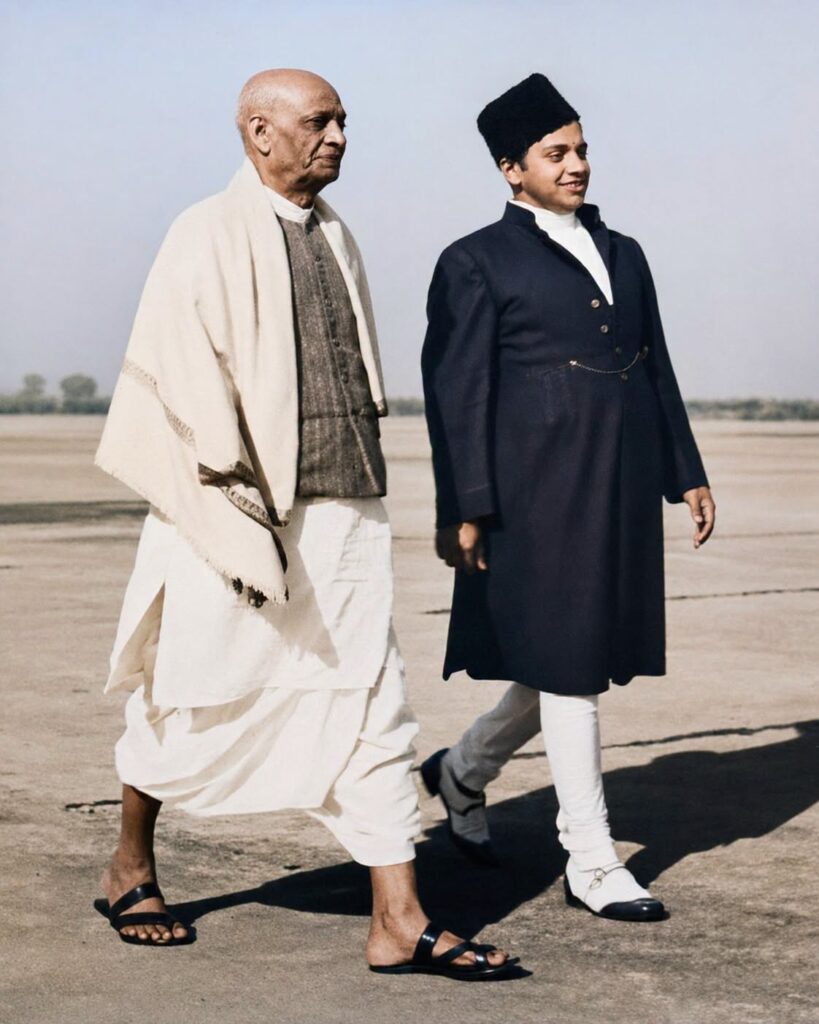
Rather than relying on coercion, Patel is widely credited with adopting a conciliatory approach. He appealed to the Scindia family’s historic contribution to India’s political and military landscape, arguing that Gwalior’s accession would inspire other princely states to follow.
As part of the agreement, Jiwajirao Scindia was appointed the lifelong Rajpramukh—the constitutional head of the newly created Madhya Bharat state, a position broadly comparable to today’s Governor. Gwalior was also designated as the state’s winter capital, recognising its political importance within the new administrative framework.
To facilitate the peaceful integration of princely states, the Government of India introduced the Privy Purse system. These were guaranteed, tax-free annual payments made to former rulers in exchange for surrendering their sovereign powers, armed forces and revenue rights. The settlements also allowed royal families to retain certain personal properties and ceremonial privileges.
Among the country’s highest Privy Purse recipients were some of Central and Western India’s most influential royal houses.
| Former Princely State | Ruling Dynasty | Annual Privy Purse (1948) | Approximate 2026 Value* |
|---|---|---|---|
| Hyderabad | The Nizam | ₹50 lakh | ₹35–40 crore |
| Baroda | Gaekwad | ₹26.5 lakh | ~₹20 crore |
| Gwalior | Scindia | ₹25 lakh | ~₹18.5 crore |
| Indore | Holkar | ₹15 lakh | ~₹11 crore |
*Approximate inflation-based estimates for contextual comparison.
The arrangement remained in force for more than two decades. However, in 1971, the 26th Constitutional Amendment abolished the Privy Purse system, officially ending all royal titles, privileges and constitutional recognition enjoyed by India’s former princes.
The move transformed the country’s erstwhile Maharajas and Nawabs into ordinary citizens under the Constitution. While many smaller royal families struggled financially after the change, several prominent dynasties—including the Scindias of Gwalior and the Holkars of Indore—adapted by entering democratic politics, establishing educational institutions and converting historic palaces into heritage hotels.
Historians generally regard the Privy Purse arrangement as one of the key compromises that enabled the largely peaceful integration of princely India. Gwalior’s accession, coupled with its designation as the winter capital of Madhya Bharat, remains an important chapter in the political history of both Madhya Pradesh and independent India.