


Colonel Sir Kailash Narain Haksar, a senior administrator whose career stretched from the royal court of Gwalior to the government of Jammu and Kashmir, was among the prominent Indian statesmen who shaped the administration of princely India during the first half of the 20th century.
Born on February 20, 1878, Haksar entered the service of Gwalior’s Maharaja Madho Rao Scindia at the age of 20. He rose steadily through the administration, becoming the Maharaja’s private secretary in 1903 and joining the Gwalior State Council in 1912.
His career in Gwalior was not confined to ceremonial court duties. During the First World War, Haksar served with the Gwalior State Forces and eventually attained the rank of colonel. He also became involved in the political coordination of India’s princely rulers at a time when their future relationship with British India was being intensely debated.
Following Maharaja Madho Rao Scindia’s death in 1925, Haksar continued working with Gwalior’s Council of Regency. In 1928, he was appointed director of the Princes’ Special Organisation, reflecting his growing role in discussions concerning the constitutional position of the princely states.
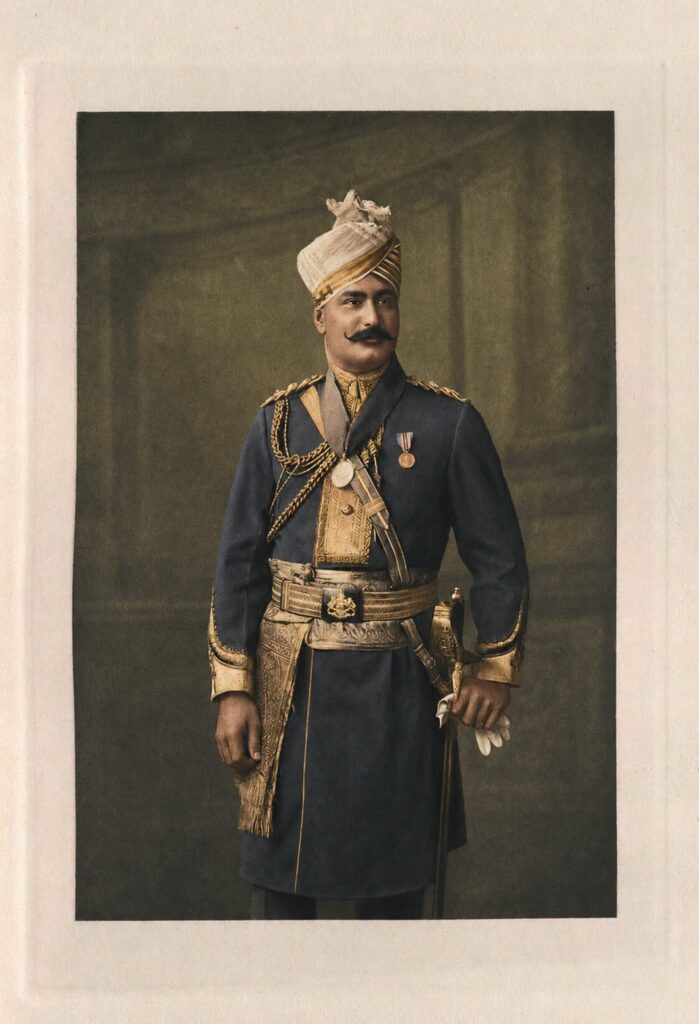
Haksar also participated in the Round Table Conference process, which brought representatives of British India and the princely states together in London to discuss constitutional reforms. His involvement placed him among the administrators and political representatives attempting to negotiate how the princely territories might fit into a future Indian federation.
His contribution to public administration received formal recognition from the British government. Haksar was appointed a Companion of the Order of the Indian Empire, or CIE, in 1911. His knighthood was announced in the King’s Birthday Honours in June 1932, when he was identified as a colonel in the Gwalior State Forces and political minister of Gwalior State.
After decades in Gwalior and other princely administrations, Haksar was appointed Prime Minister of the princely state of Jammu and Kashmir. Historical records place his term from July 1943 to February 1944, during the rule of Maharaja Hari Singh. He succeeded N. Gopalaswami Ayyangar and was followed by the distinguished constitutional adviser Sir B.N. Rau.
His tenure came during a politically sensitive period. The princely state was facing growing demands for political representation and reform, while the wider Indian independence movement was placing increasing pressure on rulers and colonial administrators. It was the sort of administrative assignment where even the paperwork probably carried political consequences.
Haksar was also associated with debates over federalism and the position of princely states in a future constitutional settlement. His public career reflected a generation of Indian administrators who worked within royal governments while simultaneously confronting the approaching end of British paramountcy.
Biographical records identify him as the son of Har Narain Haksar and the grandson of Rai Bahadur Dharam Narain Haksar, who was also a Companion of the Order of the Indian Empire. The family belonged to a tradition of Kashmiri administrators who held influential positions in several princely states.
Sir Kailash Narain Haksar died in Calcutta on January 24, 1953, at the age of 74.
Though less widely remembered than several political leaders of the independence era, Haksar’s journey—from Gwalior’s royal administration to the premiership of Jammu and Kashmir—offers an important glimpse into the officials who operated behind the grander political events of the period. His career remains part of the complicated story of how India’s princely states governed, negotiated and prepared for a rapidly changing future.